

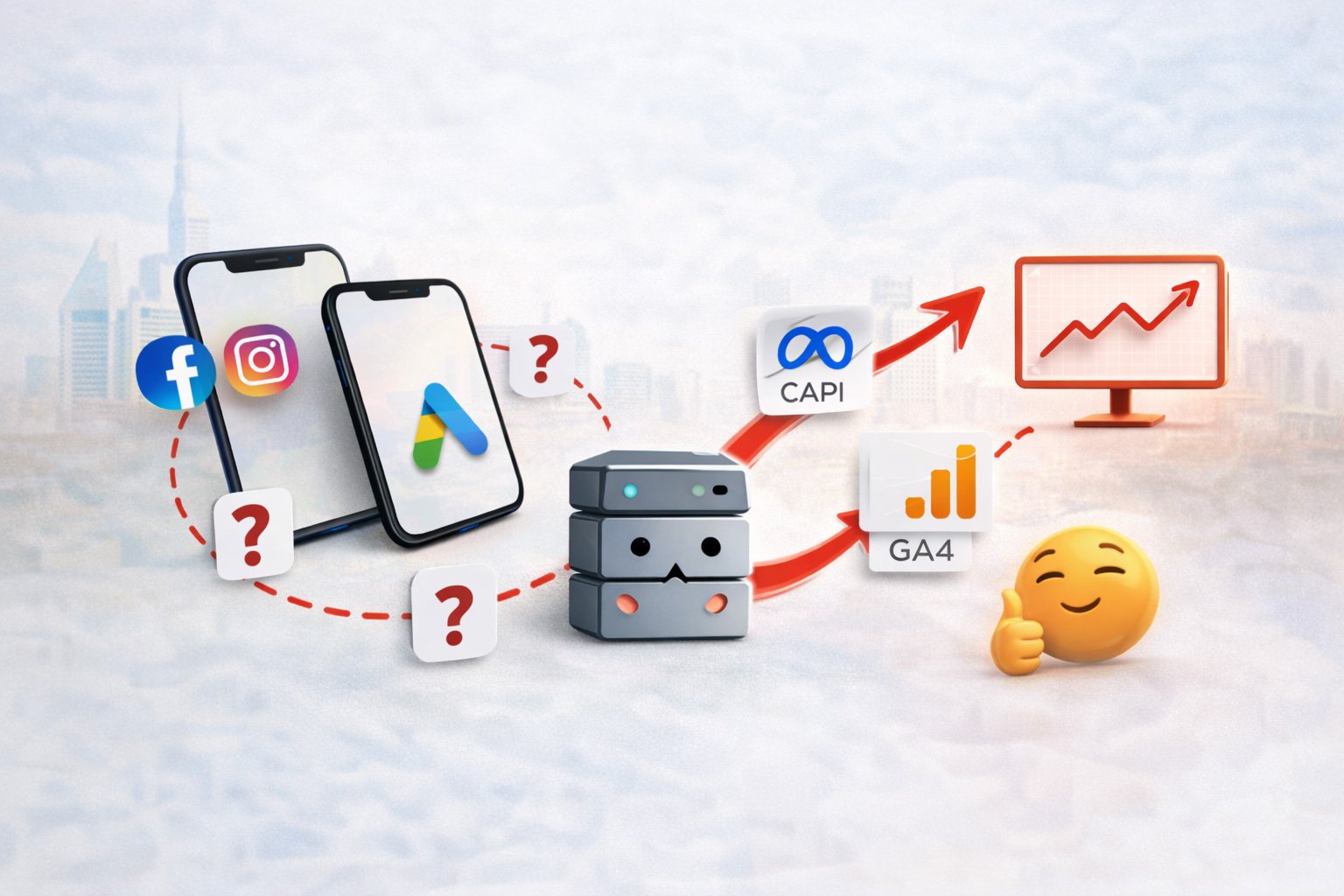
You run ads. You spend money. You get some leads. But when you look at your reports, you have no idea which campaign actually drove those leads. Sound familiar?
This is an attribution problem — and it is one of the most common and costly issues I see with digital marketing campaigns in the UAE.
The good news is that it is fixable. The bad news is that if you ignore it, you will keep spending money on channels that are not working while cutting the ones that are.
What Is Attribution and Why Does It Matter?
Attribution is simply answering the question: which marketing activity led to this conversion?
When someone books an appointment, buys a product, or fills a form, something caused them to do that. Maybe they clicked a Google ad. Maybe they saw an Instagram post. Maybe they visited your website three times before finally calling. Attribution is the process of understanding that journey and giving credit to the right touchpoints.
Without proper attribution, you are making budget decisions based on guesswork. And in a market like Dubai where advertising costs are significant, guesswork is expensive.
What Broke Attribution — The iOS Problem
In 2021, Apple introduced a major privacy update called App Tracking Transparency (ATT). From that point, iPhones stopped sharing data with advertising platforms like Meta unless the user explicitly opted in. Most people did not opt in.
The result? Meta lost visibility into a large portion of conversions happening on Apple devices. So your Meta Ads dashboard started showing fewer conversions than were actually happening. Campaigns that were actually working started looking like they were underperforming.
This caused a lot of businesses to cut their Meta budgets incorrectly — not because Meta was not working, but because the tracking was broken.
The Solution: Meta CAPI
Meta CAPI stands for Conversions API. Instead of relying only on the browser (which Apple blocked), CAPI sends conversion data directly from your website server to Meta. Apple’s changes cannot interfere with server-to-server communication.
The result is that Meta gets back the data it needs to optimise your campaigns, and your reporting becomes far more accurate.
How to Implement Meta CAPI
- The easiest way for most businesses is to use a tool like CustomerLabs, Stape, or Segment — these sit between your website and Meta and handle the server-side sending automatically
- If you are on Shopify, the native Meta integration includes CAPI by default
- For WordPress or custom sites, tools like CustomerLabs do not require a developer and can be set up in a few hours
- Always run CAPI alongside your regular Meta Pixel — this gives you the best of both, with deduplication built in
GA4 and Proper Tracking Setup
Beyond Meta, a proper tracking foundation means having Google Analytics 4 (GA4) installed and configured correctly. This is where most UAE businesses are falling behind.
GA4 is not just installed and forgotten. You need to set up conversion events for every meaningful action: form submissions, WhatsApp clicks, phone number clicks, appointment bookings, page depth, and time on page. Without this, GA4 just tells you how many people visited — which is almost useless for making decisions.
What a Proper Tracking Setup Looks Like
- GA4 installed with all conversion events configured
- Google Tag Manager used to manage all tracking tags in one place
- Meta Pixel + CAPI running together with deduplication
- UTM parameters on every paid link so you know exactly which campaign, ad set, and ad drove each visit
- CRM integration so offline conversions (phone calls, walk-ins) are fed back into the platforms
The UAE-Specific Challenge
In the UAE, a large portion of conversions happen via phone calls and WhatsApp messages — not online forms. This means even businesses with good digital tracking are missing a huge chunk of their conversion data.
The fix is call tracking software (tools like CallRail or CallTrackingMetrics) combined with WhatsApp tracking. This closes the loop between your ads and what is actually happening offline.
| Key Takeaway: If your ad reports and your actual business results do not match up, you have an attribution problem. Fix your tracking before increasing your budget — otherwise you are scaling a broken system. |